By leveraging VPP demand response technology, establish a scheduling platform for refined energy consumption management to achieve peak shaving and valley filling.
Based on the power industry guidance documents issued by the Economic and Information Commission, including the “Implementation Rules for Electricity Demand Response” and the “Public Notice Version of Peak Shaving Demand Response Application Results,” we provide Pudong Power Supply with a comprehensive virtual power plant solution through Protocol No. 1867.
To achieve refined energy management, we have developed core capabilities including platform scheduling, KPI algorithms, subsidy calculation algorithms, and potential forecasting, thereby facilitating the successful implementation of the “virtual power plant.”
2018
IoT, Industry Protocols, Energy, Iterative Development
01 VPP Virtual Power Plant
1. Deepen electricity demand-side management
Employ economic incentives to guide power users in proactively reducing peak loads and enhancing their own refined electricity management capabilities.
3. Alleviating Grid Operation Pressure
Electricity consumption continues to grow at a rapid pace, with the peak-to-off-peak electricity consumption gap widening year by year. Seasonal power shortages occur from time to time.
2. Optimizing Resource Allocation
Seasonal and time-of-day power shortages persist, and the continuously growing electricity demand places increasing pressure on maintaining a balanced power supply and demand.
4. Real-Time Monitoring
Manage and analyze vast amounts of data within the database, presenting it to every visitor through an intuitive data visualization dashboard. This approach ensures data transparency.
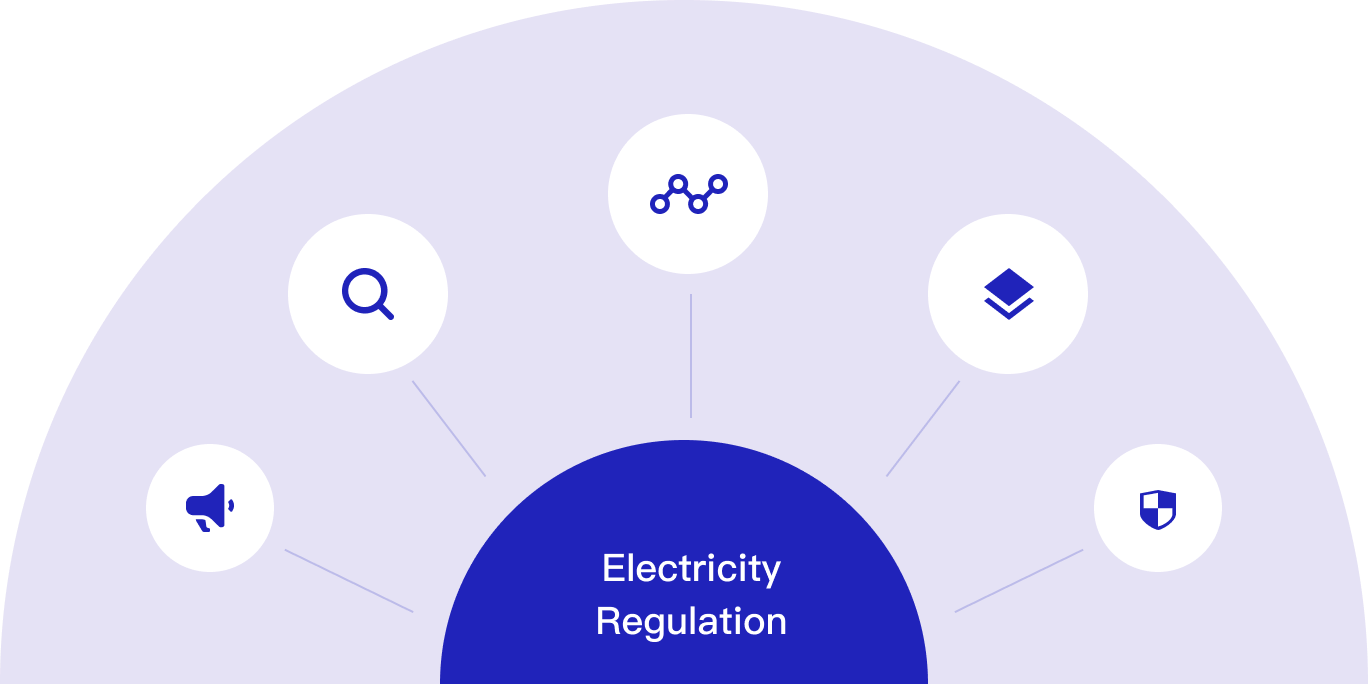
02 Deepen Electricity Demand-Side Management
- Administrator Dashboard
- Publish demand responses, monitor demand responses, activate backup users when demand response is insufficient, view response results
- User Endpoint
- View demand response, participate in demand response, execute demand response, view demand response results, settle response results
- Operations and Maintenance End
- Manage system users, basic configurations, etc
03 Optimize Resource Allocation & Alleviate Grid Operation Pressure
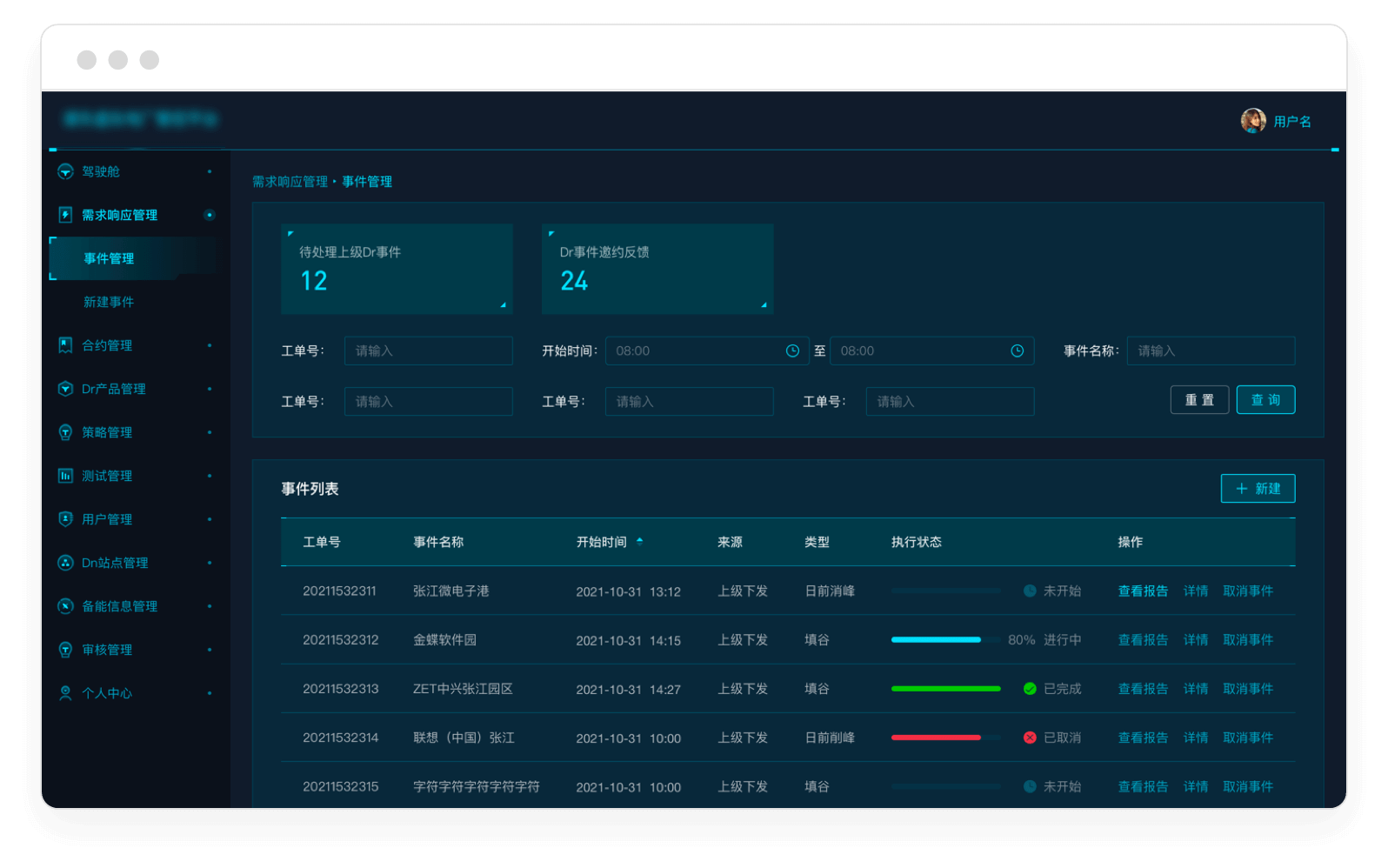
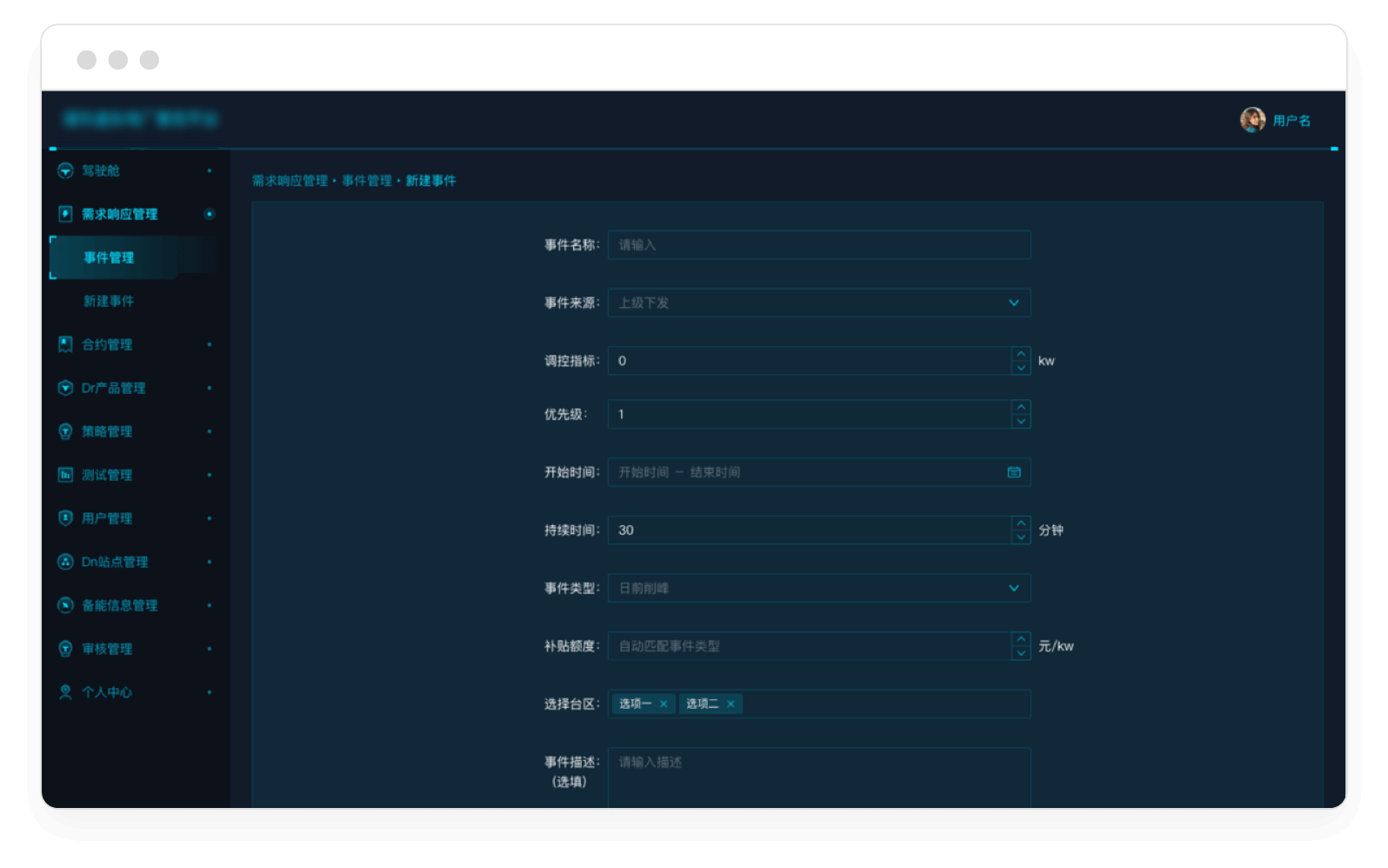
Issue peak shaving events during peak electricity consumption periods and issue valley filling events during off-peak electricity consumption periods.
Calculate baselines within the event response scope based on big data and provide multiple response options, enabling users to flexibly select plans based on available power capacity to participate in the event, actively mobilizing user-side engagement. Regulators can also flexibly adjust invited users to optimize resource allocation requirements.
During event execution, if a user's actual power generation falls short of expectations, big data calculations will identify the user whose power output most closely matches the required electricity demand. This user will be immediately activated to participate in the event, thereby optimizing resource allocation.
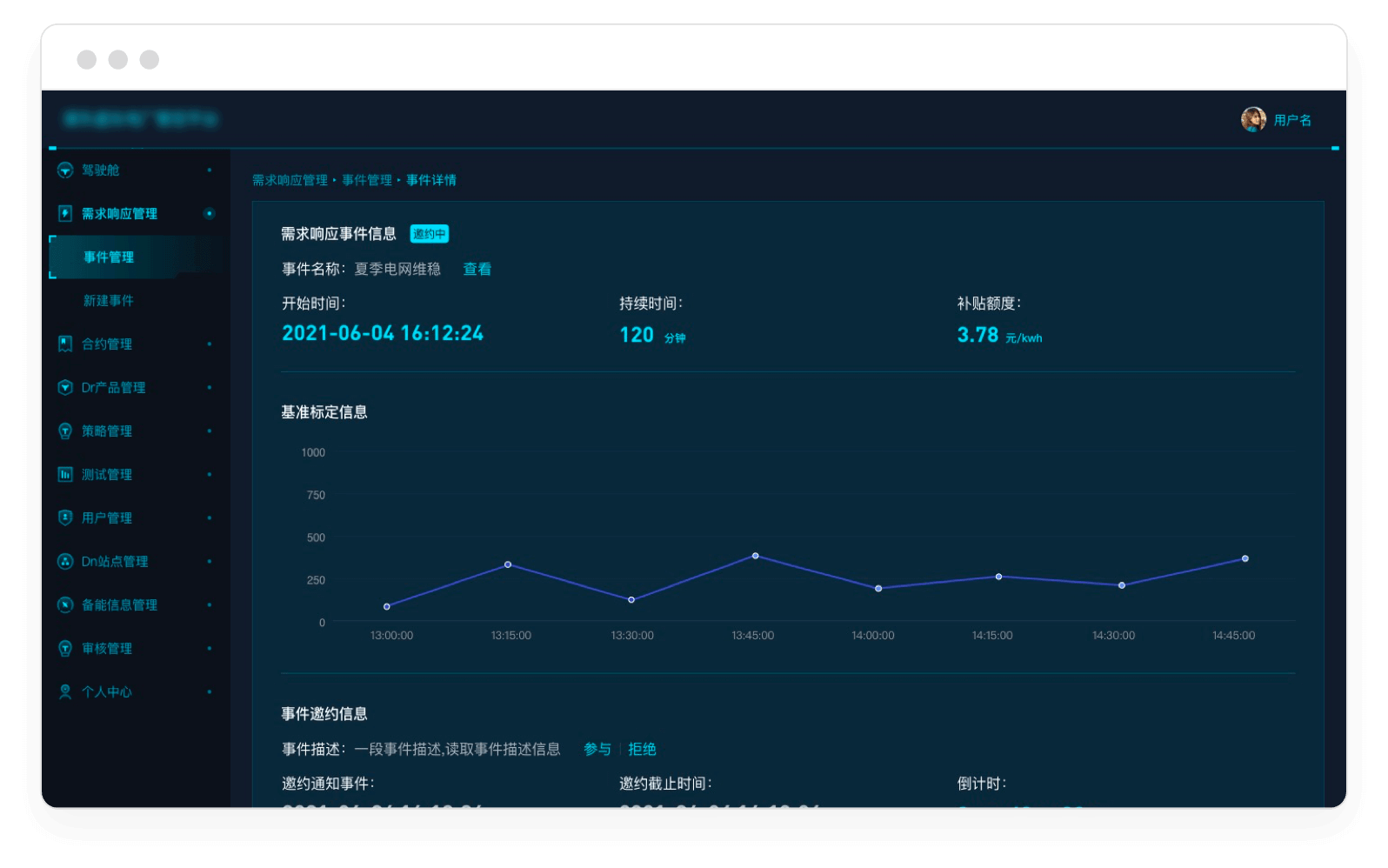
04 Real-Time Monitoring
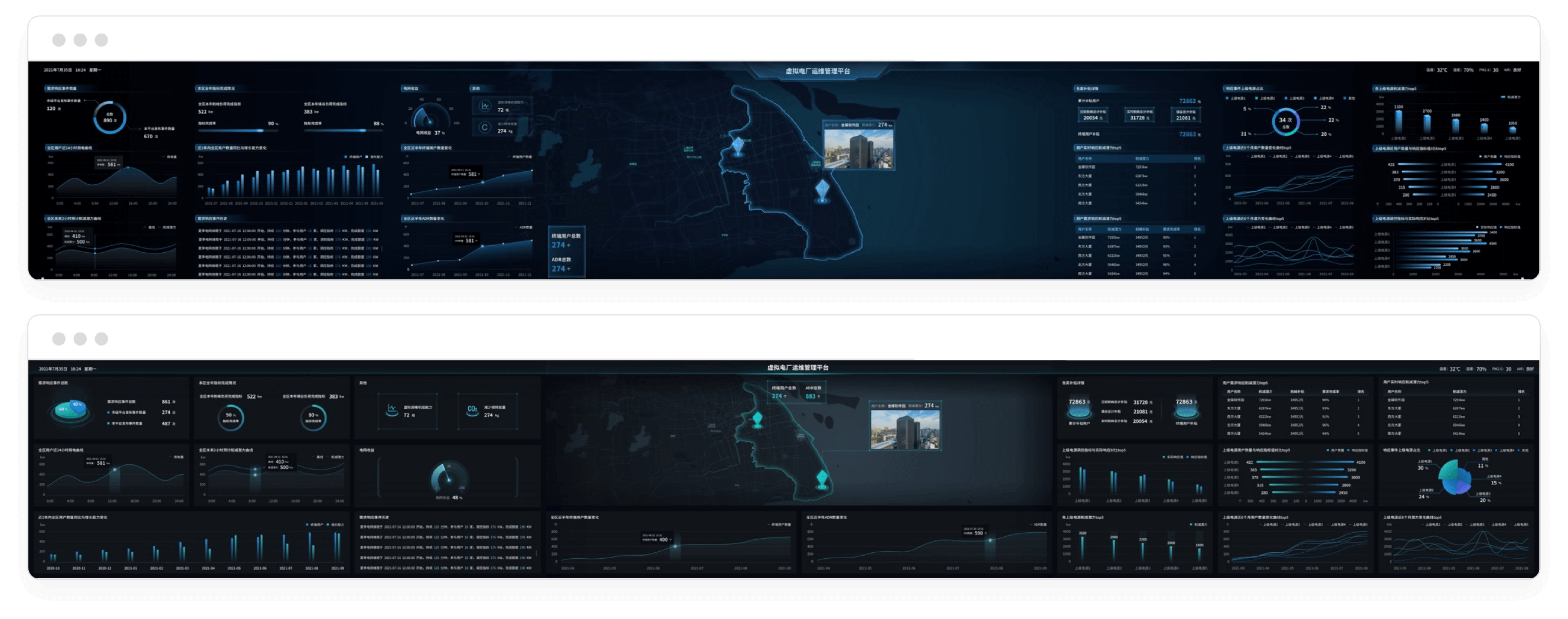
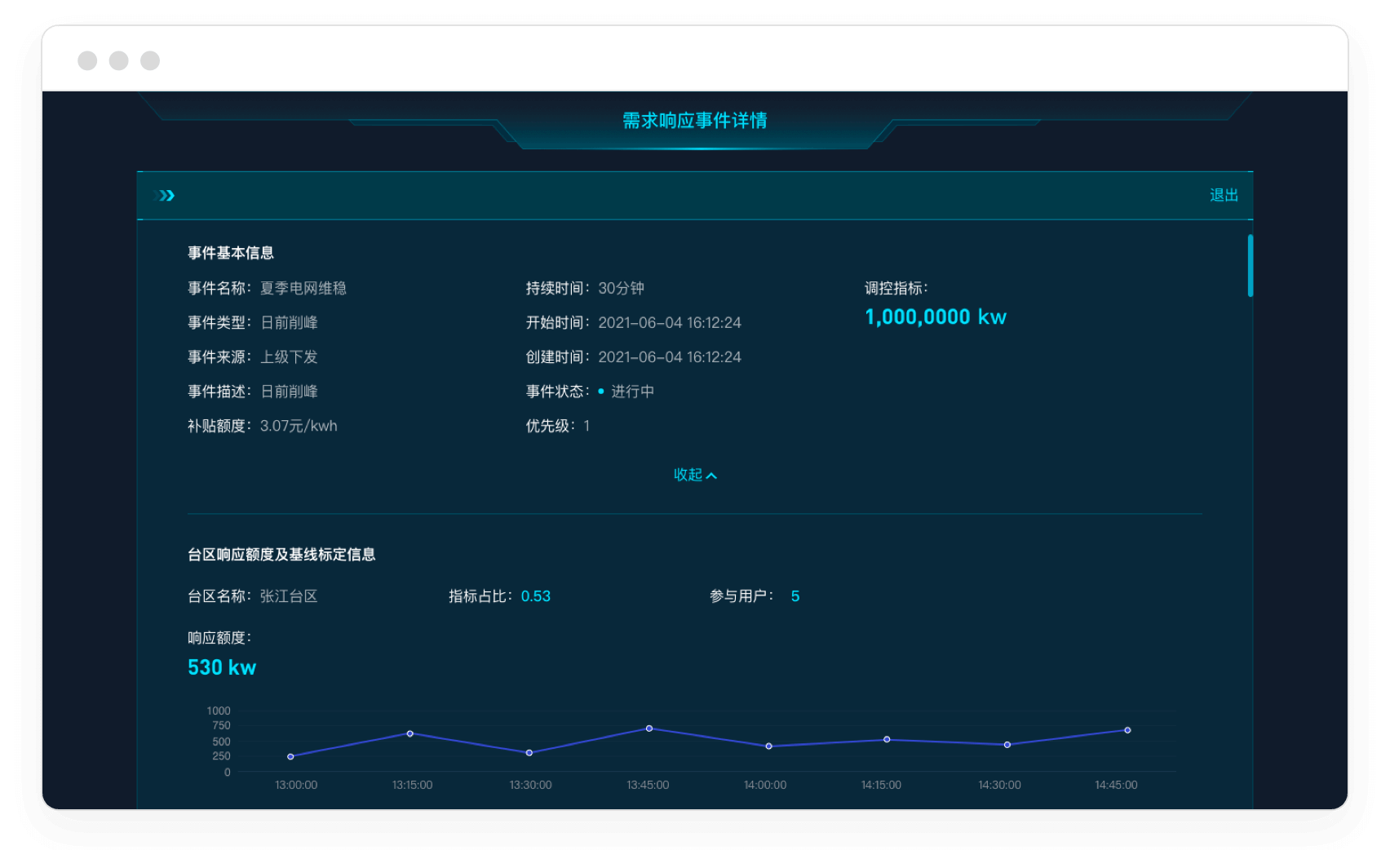
Statistics on event-related data within the system are compiled from both the management and user perspectives. Data generated from various complex business processes is visualized through charts to explain business trends and underlying causes. Real-time insights into resource movements and issue alerts enable rapid decision-making.