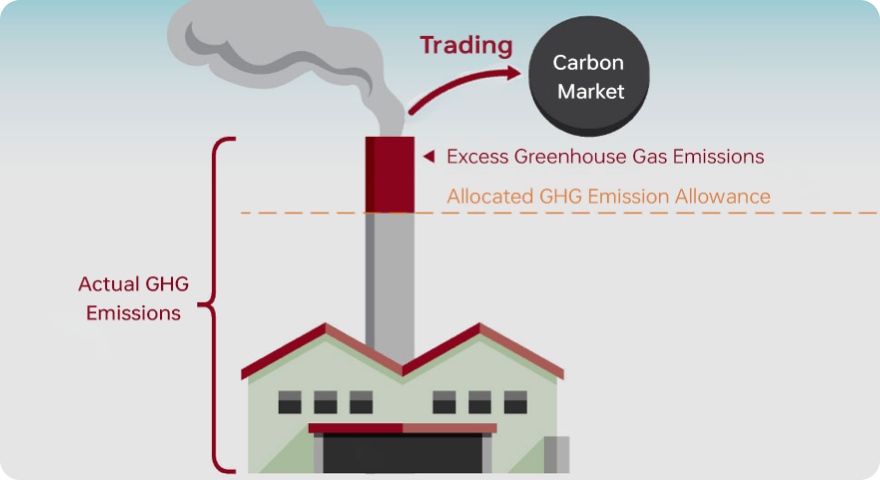
 3060 Mandatory Emissions Reduction Against the backdrop of the “dual carbon” goals for 2030 and 2060, China's public utilities and energy companies are accelerating their low-carbon transformation. By 2021, 2,225 emitting entities had been incorporated into the national carbon market's regulatory framework. As the carbon market stabilizes and expands its sectoral coverage nationwide, enterprises lacking effective risk management and quality control strategies will face increased operational and regulatory costs throughout this transition.
 Emissions statistics are unclear Due to rapid industrial restructuring and technological advancement in China, parameters related to carbon emissions are constantly evolving. Current challenges include unreasonable selection of energy consumption data and certain fossil fuel carbon emission factors, significant discrepancies in carbon emission calculations across different institutions, and a lack of annual continuity. Given the immaturity of statistical methodologies, reliable empirical guidance is essential. Only by benchmarking against established dual-carbon platforms can data quality meet standards, enabling effective carbon inventory and verification.
 Challenges in connecting massive data nodes The wide variety of connected sensors and smart meters, coupled with diverse physical communication links and differing communication protocols, results in an inconsistent overall management system and data architecture. This heterogeneous data cannot support the current national requirements for dual control of energy consumption volume and intensity.
01 Industry Challenges
02 Service Positioning
Dual Carbon Technology Integration Service Provider Delivering authentic and reliable implementation experience and city-level dual carbon solutions Empowering clients to build comprehensive, visual dual carbon platforms
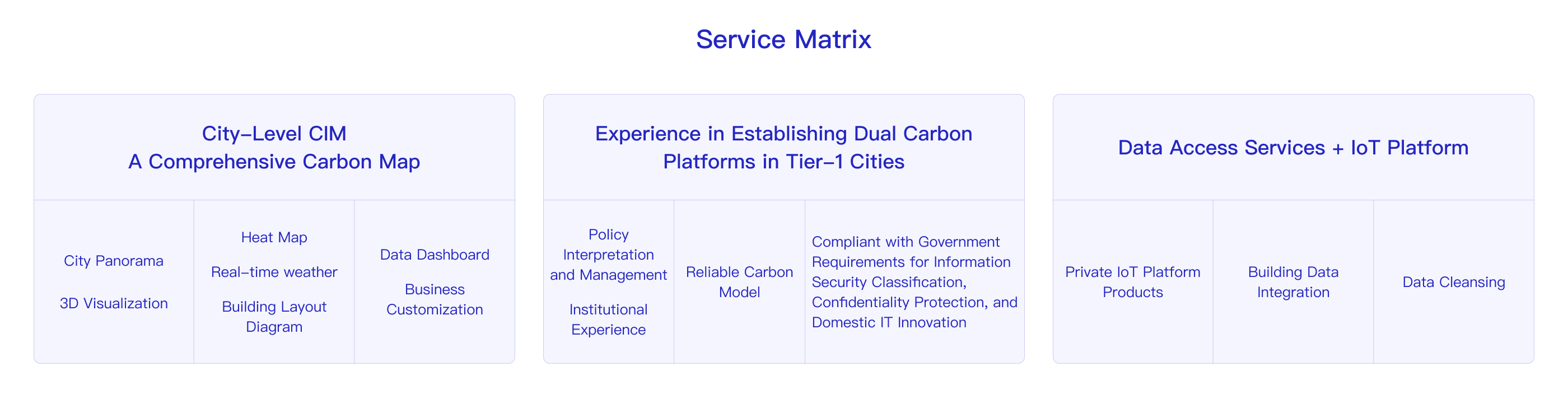
03 City-Level CIM: A Comprehensive Carbon Map
To achieve the dual carbon goals, relevant government departments must first understand the dynamics of major carbon emitters. How do carbon emissions rank across sectors such as industry, energy, transportation, and residential living? What is the energy mix on the consumption side? What are the respective carbon emissions levels of different cities?
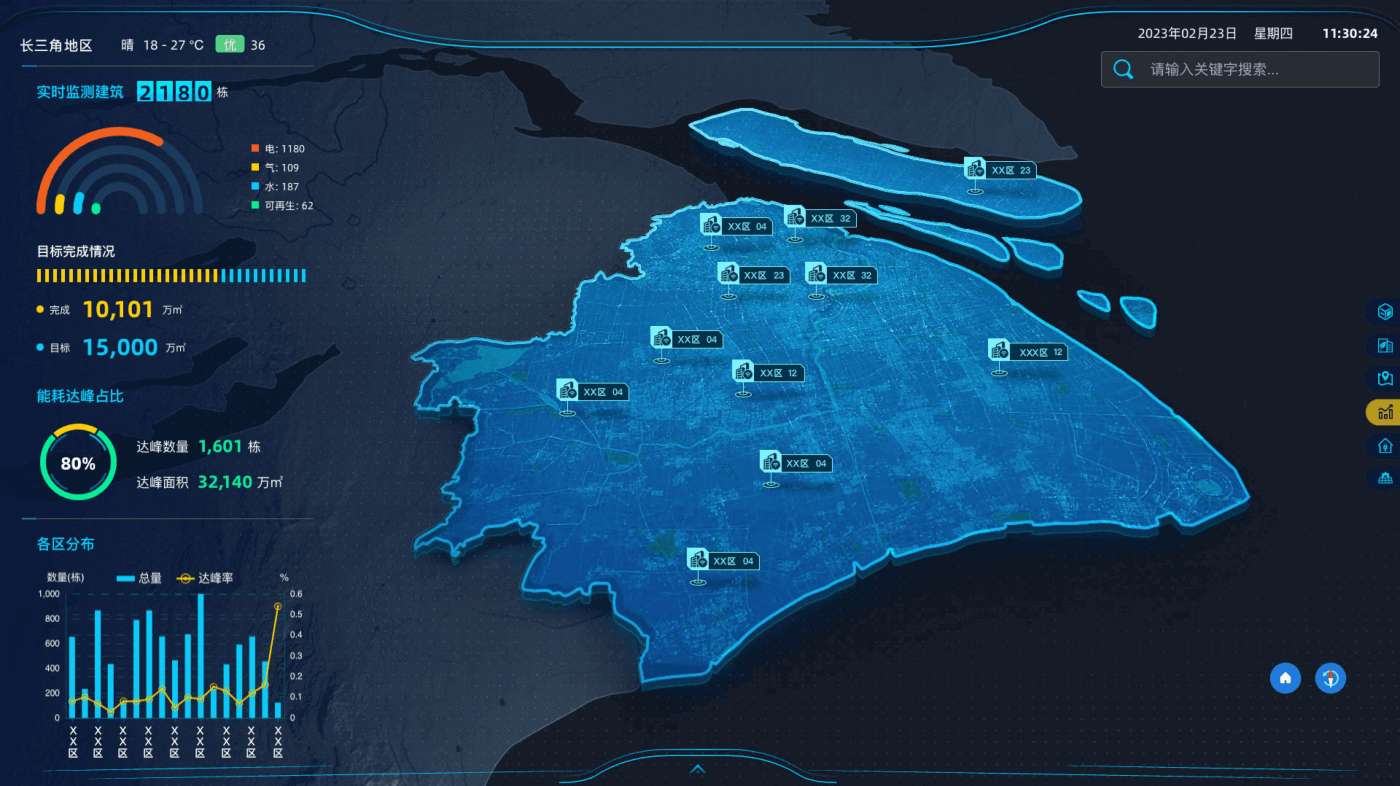
In the past, these issues required significant manpower to investigate and compile lengthy reports. Now, a single “map” can present the answers. Through the “Panoramic Carbon Map” feature built using city-level CIM, relevant departments can view the carbon emission distribution across the province, cities, and districts at a glance. With a simple click to switch jurisdictions, they can examine total emissions volume and intensity, gaining macro-level insights into data across different dimensions. This enables clear visibility into carbon emissions.



04 Experience Building Dual-Carbon Platforms for Tier-1 Cities
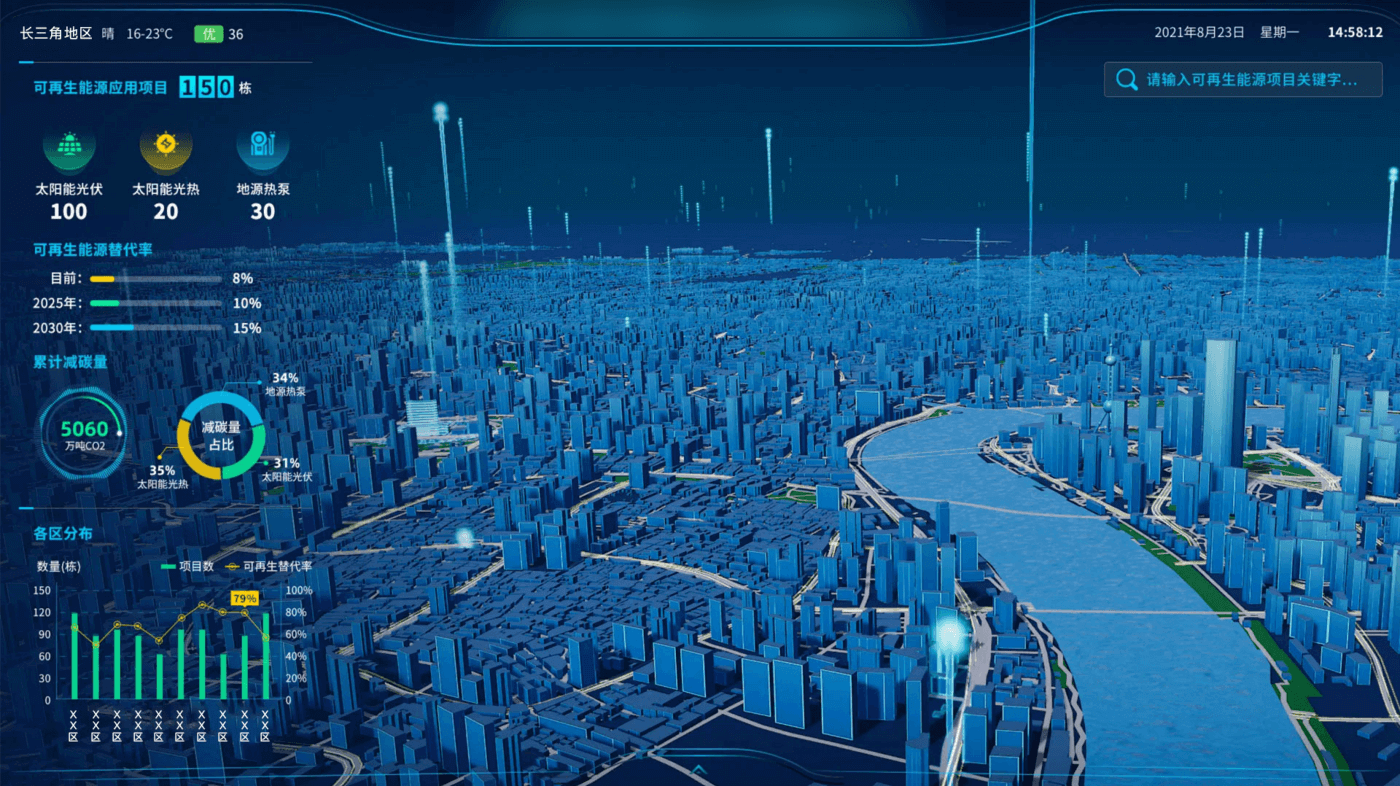
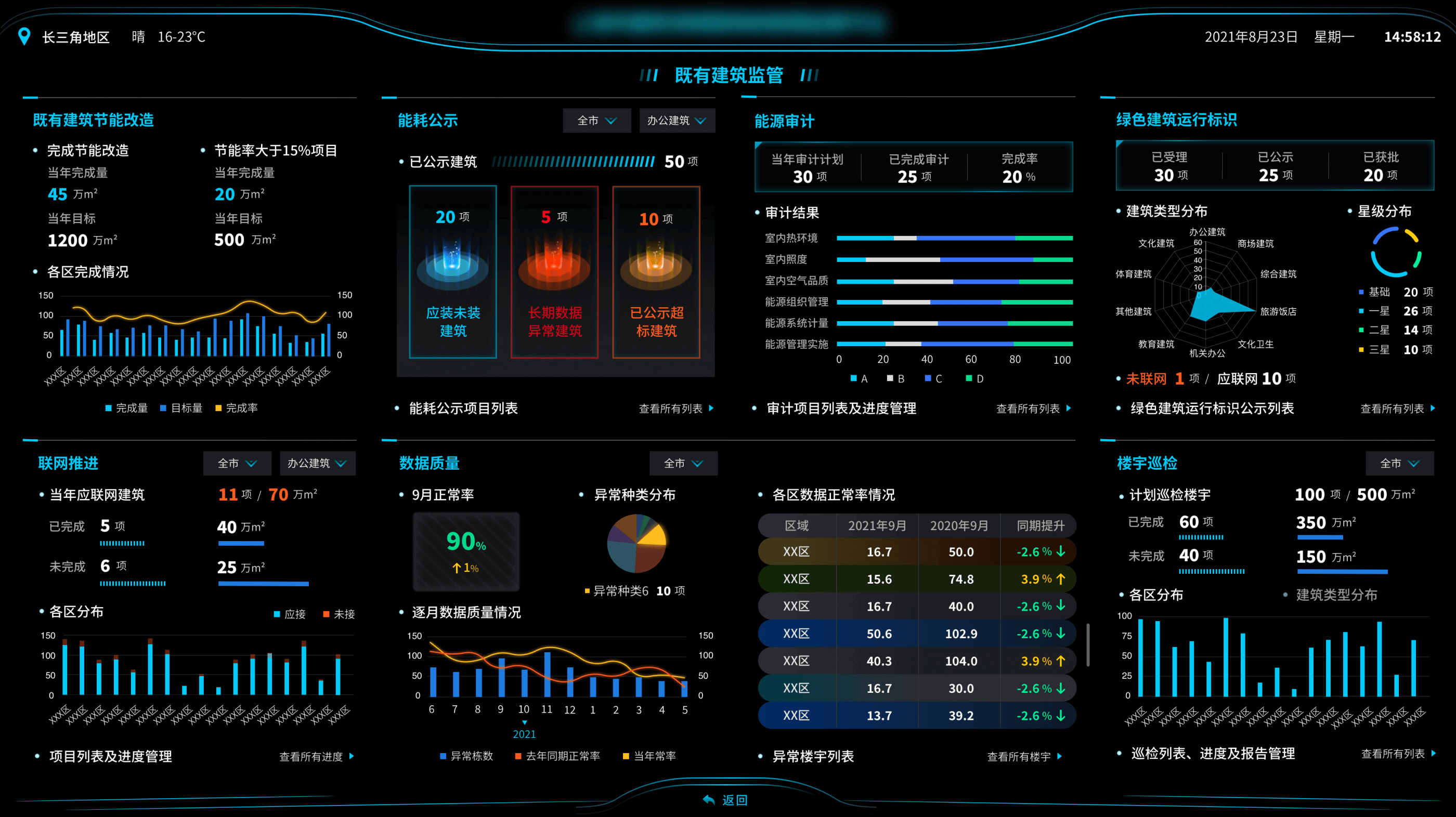
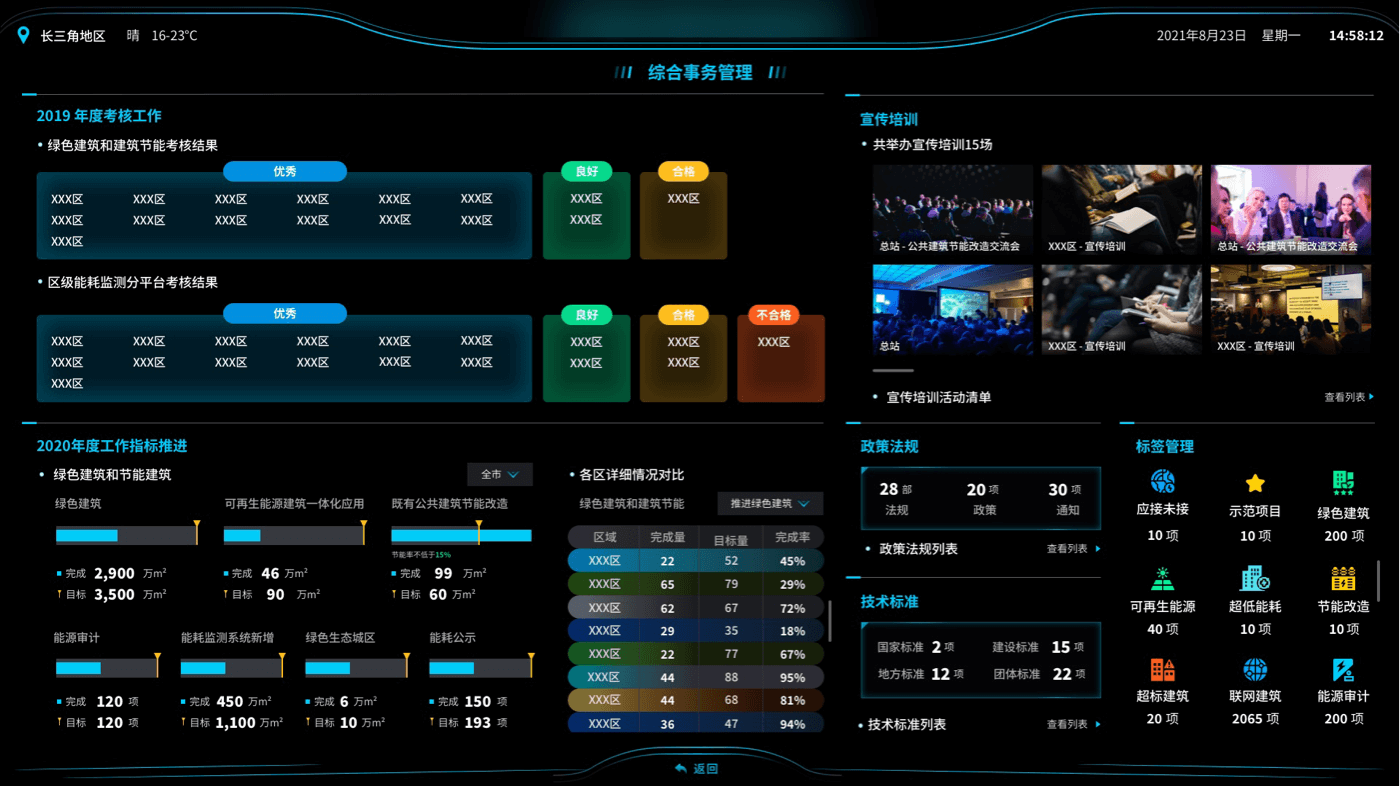
Supporting the implementation of national carbon neutrality and carbon peaking policies, we established carbon emissions monitoring for buildings exceeding 20,000 square meters in a certain city, enabling CIM to visualize carbon footprints
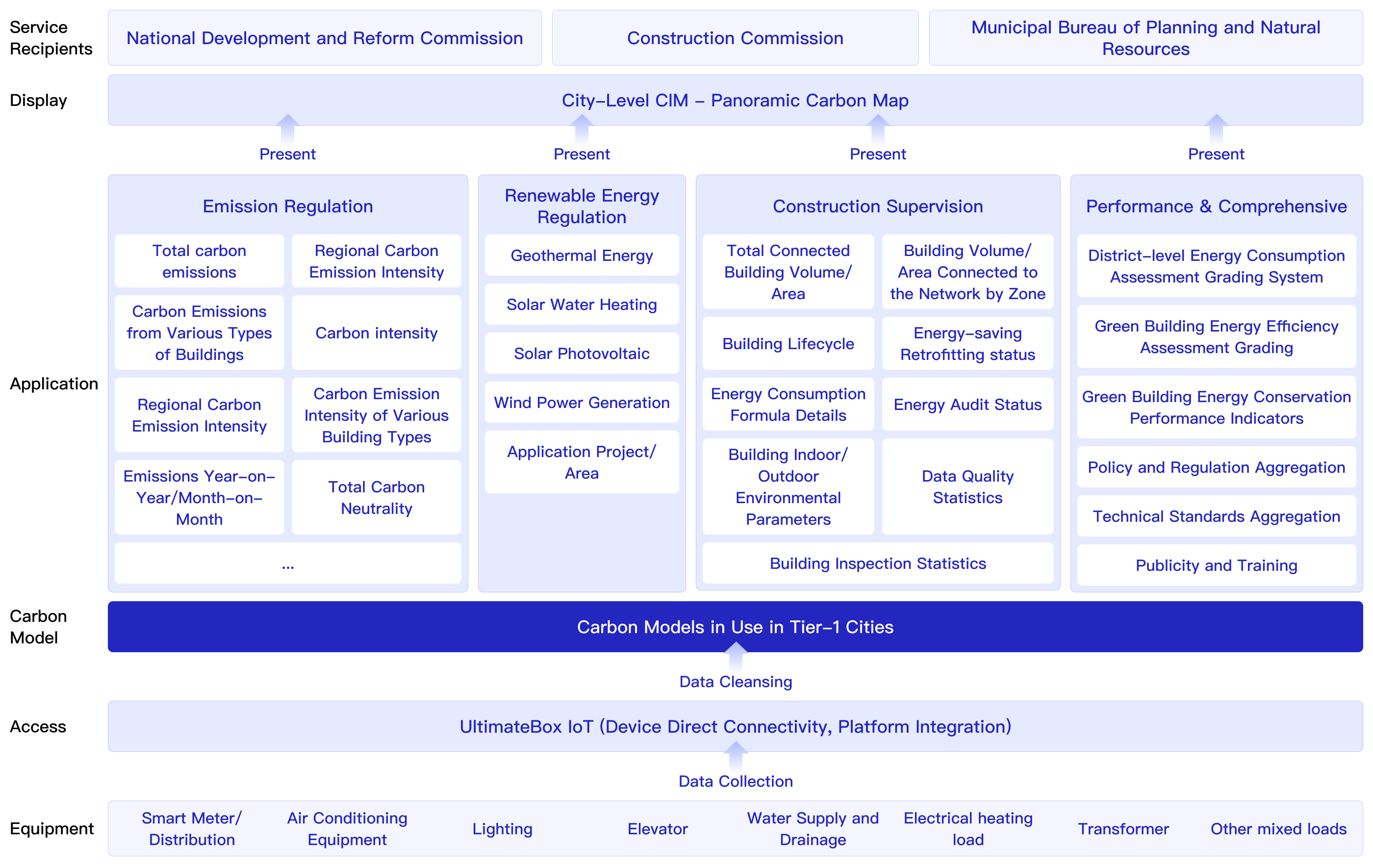
 Emission Regulation
 Renewable Energy Regulation
 Construction Supervision
 Performance & Comprehensive
05 Data Integration Services + IoT Platform
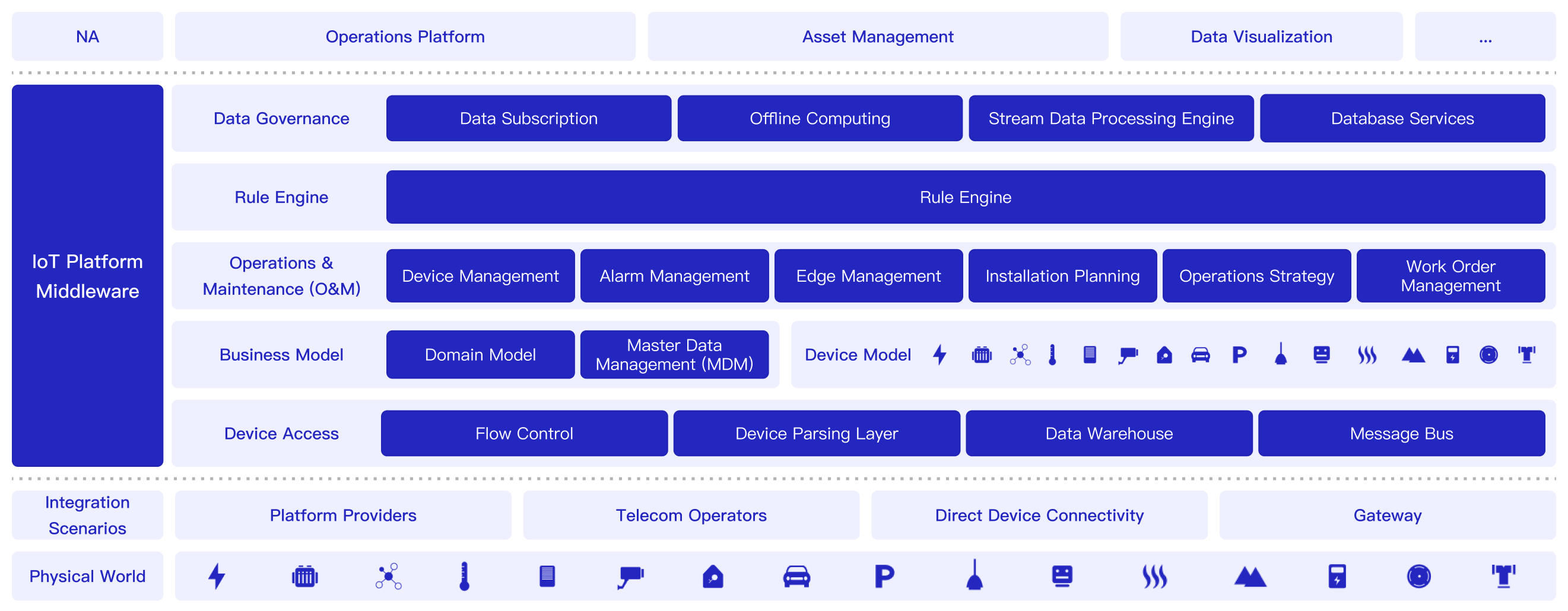
We specialize in long-term service models within the IoT domain, delivering end-to-end service experiences through our access and integration services. We help partners build a unified enterprise IoT platform that enables centralized management across internal networks, resolving technical challenges such as device integration, subsystem connectivity, ecosystem platform interoperability, communication protocols, platform architecture, data storage, and security. This allows our partners to focus on business growth rather than technical complexity.
Through the UbOS IoT platform foundation, we achieve hardware heterogeneity with unified data sources, enabling seamless integration across different manufacturers, protocols, models, and terminal types. At the same time, we cleanse and normalize all incoming data, establishing standardized data schemas for various device categories, thereby providing a reliable data backbone for the entire dual-carbon initiative.
I. Data Access Service
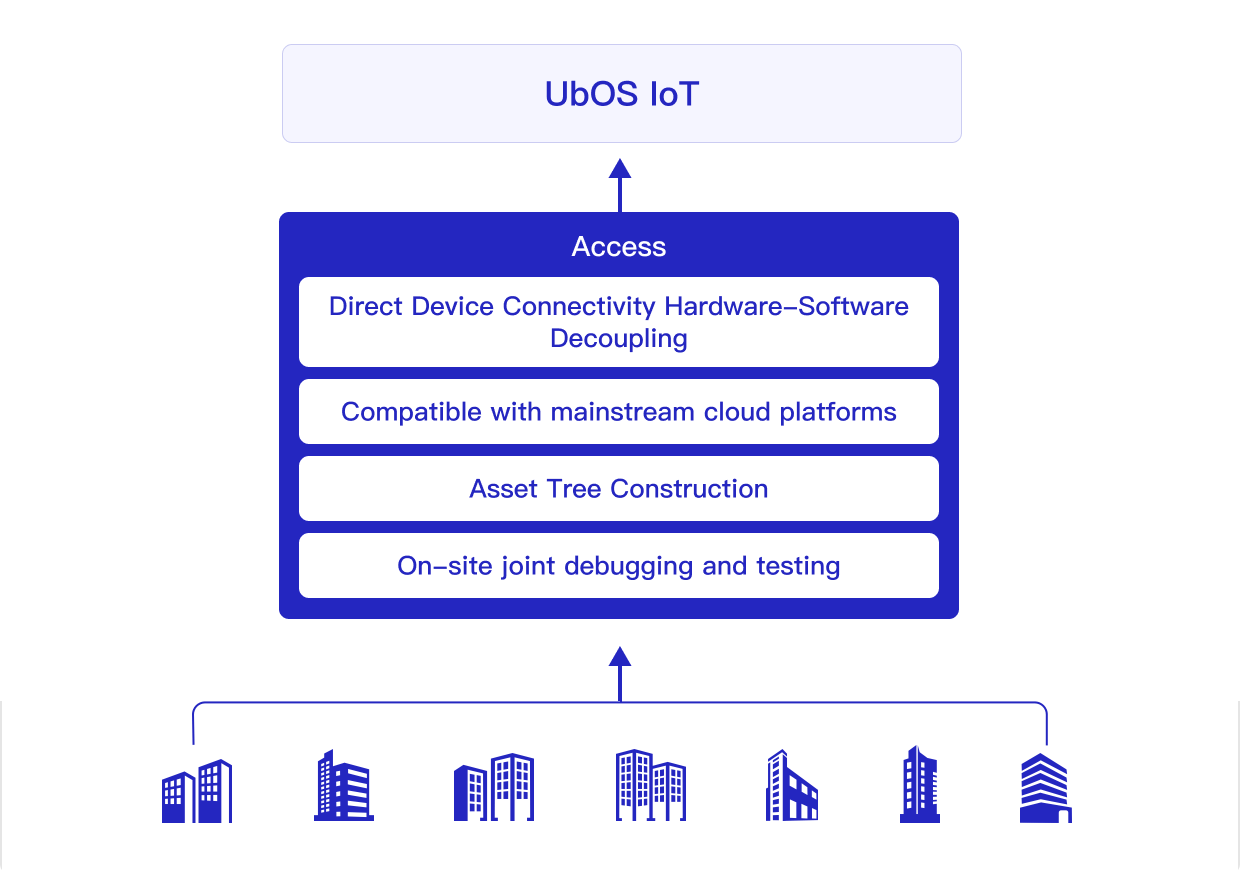
- 1. Ubos IoTTo address citywide building connectivity requirements, we utilize the UbOS IoT platform as the intermediary layer between business systems and sensing devices. Serving as a critical bridge, the platform provides stable and reliable data subscription services to northbound applications while enabling extensive device and data integration downstream, forming a comprehensive city-level sensing network.
- 2. Massive Data and Computing Power OptimizationThe first phase of the overall project has already integrated over 20,000 square meters of building space, requiring compliance with domestic IT innovation standards and private deployment. To meet these requirements, we leverage edge computing algorithms and a scalable architecture design to ensure a stable computing foundation for massive data processing.
- 3. Implementation and Joint CommissioningThe professionalism of implementation and joint commissioning directly determines the sensing capability of the entire perception network. Leveraging years of practical experience in IoT project deployment, we have developed a standardized service process that provides end-to-end support—from installation guidance and asset point mapping to on-site commissioning and verification—ensuring long-term accuracy and reliability of field data.
II. IoT Platform Architecture
Get a quote for this solution immediately
Based on your requirements, our professional sales consultants will be at your service