01 Fire Safety Policies
Strengthen the informatization of urban safety supervision, establish a mechanism for the open sharing of public data resources among relevant safety departments, accelerate the systematization and intelligentization of urban safety management, deepen the construction of urban lifeline projects, and actively develop and promote the application of advanced safety technologies and products in risk prevention and control, disaster prevention and mitigation, prediction and early warning, monitoring and surveillance, personal protection, and emergency response.
2018 Opinions on Promoting Urban Safety Development
2019 Requirements for Fire Protection Technical Service Providers
Strengthen supervision and management of fire protection technical services. Fire rescue authorities at all levels shall conduct random inspections of the operational qualifications and service quality of fire protection technical service providers as part of routine fire safety supervision and inspection work.
Actively promote the application of information technologies such as networked fire safety monitoring and big data–driven fire analysis, and accelerate the development of grassroots fire-grid informatization platforms.By the end of 2021, all prefecture-level and above cities are required to establish fire IoT monitoring systems, and by the end of 2022, a tiered urban fire big data repository must be fully deployed.
2020 National Three-Year Action Plan for Specialized Safety Production Rectification
2021 Opinions on Advancing the Informatization of Emergency Management
We will advance the modernization of emergency management through informatization, strengthen the focus on practical application and the driving force of “smart emergency response,” consolidate the foundation for informatization development, address shortcomings in areas such as network data, security, and standards, and promote the formation of a comprehensive, well-structured, and technologically advanced emergency management informatization system. This will comprehensively enhance capabilities in monitoring and early warning, regulatory enforcement, command and decision support, rescue operations, and social mobilization.
02 Industry Challenges

Municipal Fire Unified Management Platform
Significant rescue risks exist in urban firefighting operations, with each fire incident causing irreparable losses. In fire prevention oversight, there is an inability to dynamically monitor fire hazards, resulting in weak proactive prevention capabilities and the inability to implement real-time monitoring. Individual fire departments operate as isolated “information silos”, necessitating effective regulatory and prevention measures alongside the ability to break down these information barriers to achieve intelligent fire management.

Chemical Fire Safety and Production Safety
During the operation of chemical enterprises across various provinces, municipalities, and regions, safety accidents frequently occur due to inadequate safety responsibility systems, poor compliance awareness, and insufficient safety management. Concurrently, fire departments struggle to conduct effective oversight and management of enterprises' daily operations, hindering the implementation of relevant safety policies.

Massive Device Connectivity and High-Concurrency Data Processing
Fire protection equipment encompasses diverse types, is deployed across dispersed locations, and exists in vast quantities. Different fire protection devices are integrated with distinct cloud platforms. As fire protection equipment data from across the entire city is connected, an access platform with capabilities for massive device connectivity and high-concurrency processing is required.
03 Capability Boundaries
I. Municipal Fire Platform
Implemented in Ji'an City, Jiangxi Province
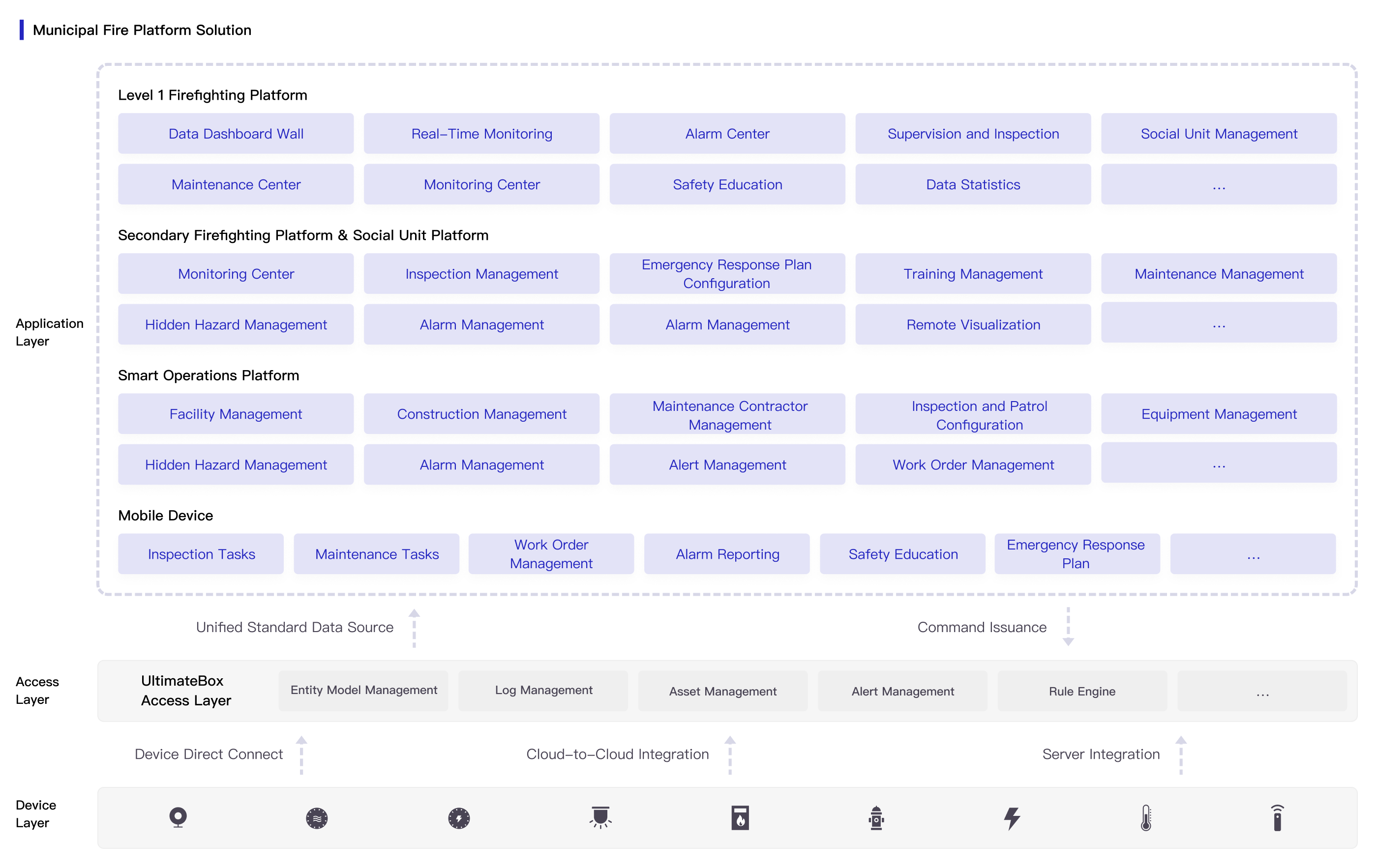
To support the scientific management of the local fire brigade and establish a unified municipal fire platform, we provide an integrated fire platform comprising five components: the primary platform, secondary platform, social platform, fire administration platform, and operations command center—all encompassing the traditional definitions of these tiers.
1. Product Value
·Fire Protection Tier-1 Platform
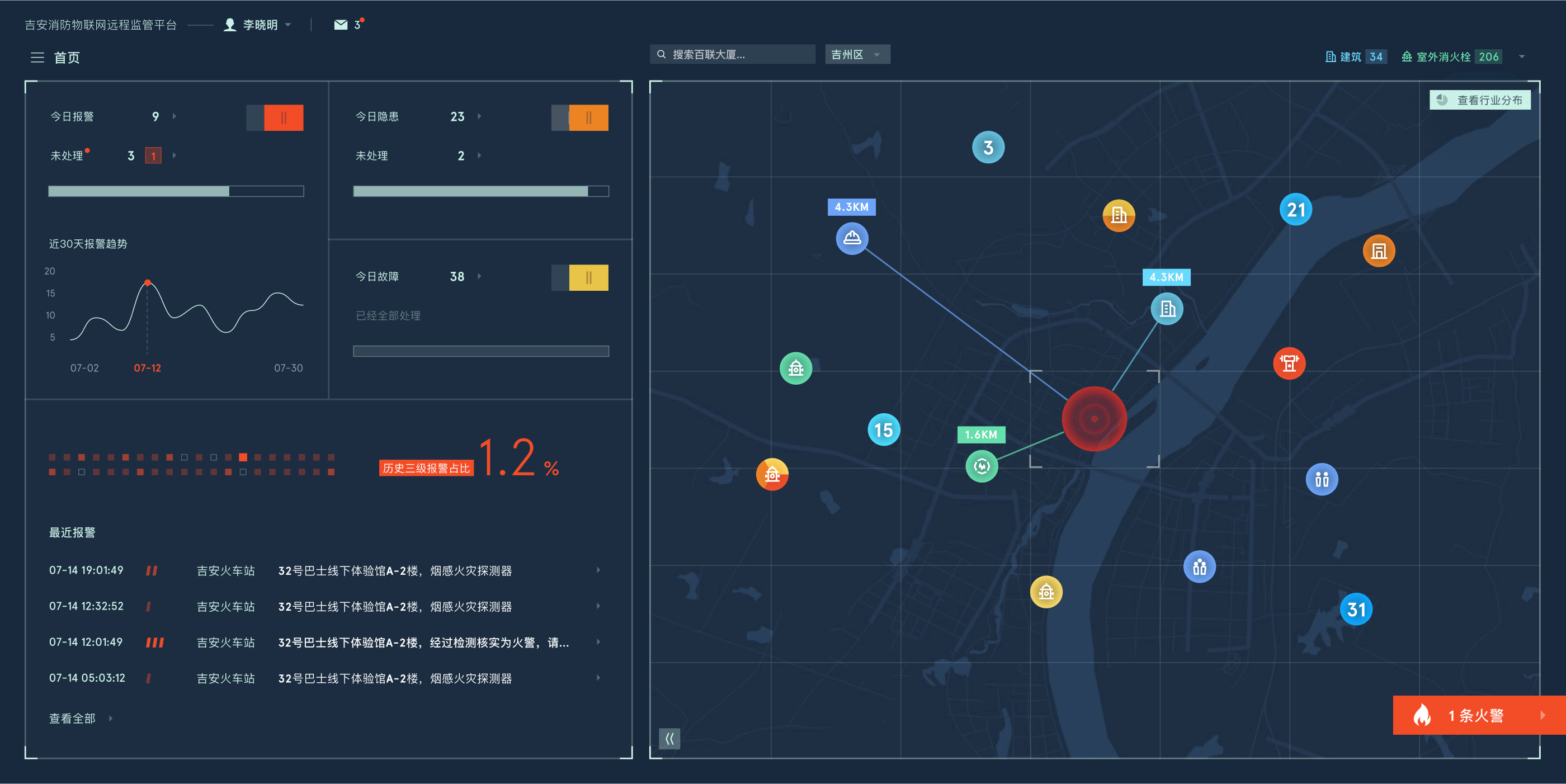
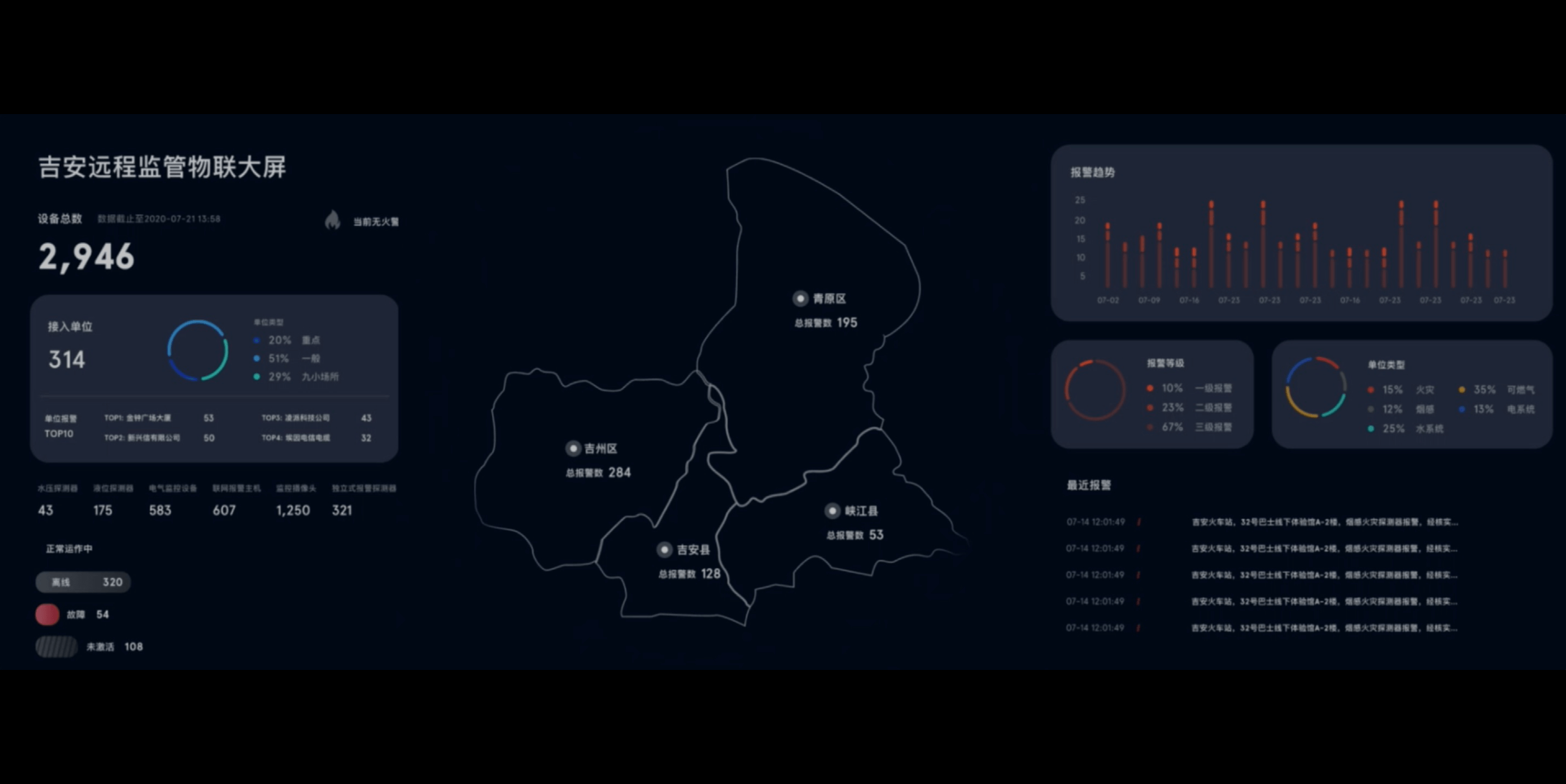
Guided by the Ministry of Public Security of the People's Republic of China's Directive No. 297, establish a city-level smart fire protection Tier-1 platform that meets specified requirements. Assist in formulating fire protection data protocols and construct a unified network management platform capable of collecting fire protection data from all key units across the city. This platform will support local fire brigades in issuing daily fire prevention tasks and instructions to each key unit through the platform.
·Fire Safety Tier-2 Platform & Social Platform
Establish fire safety tier-2 platforms for all district-level departments across urban areas to assist in managing key facilities within their jurisdictions. These platforms will transmit real-time fire alarm and alert data while creating corresponding social platforms for each key facility. These platforms will facilitate the acceptance of fire safety tasks and the submission of routine maintenance, inspection, and review data, achieving the core operational requirement of networked, real-time oversight of fire safety affairs.
·Smart Operations and Maintenance Platform
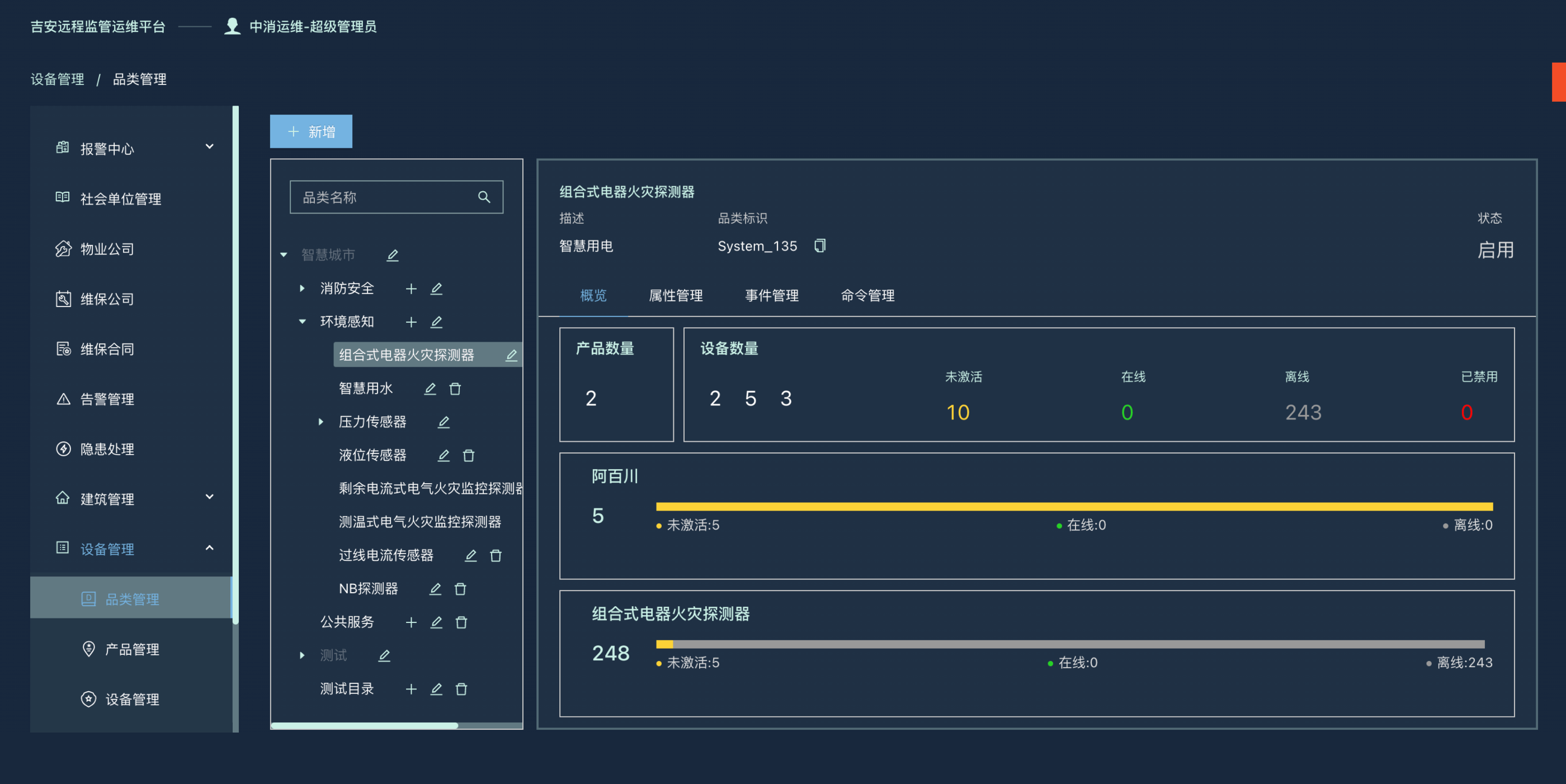
The Smart Operations and Maintenance Platform assists maintenance units in managing maintenance tasks for large-scale fire protection facilities. Through features such as equipment ledgers, repair support, maintenance models, and smart work orders, it reduces reliance on manual labor and effectively lowers operational costs.
·Fire Operations Command Center
Provides intelligent operational support during firefighting and emergency response, delivering detailed information on firefighting resources surrounding the incident site. This includes critical data such as outdoor hydrant water pressure, fire station equipment status, and water pressure within buildings at the fire scene, thereby offering data-driven decision support for developing effective fire suppression plans.
2. Product Matrix
II. Refined Fire Safety Management in Chemical Industrial Zones
Now Implemented in Shanghai Chemical Industrial Zones
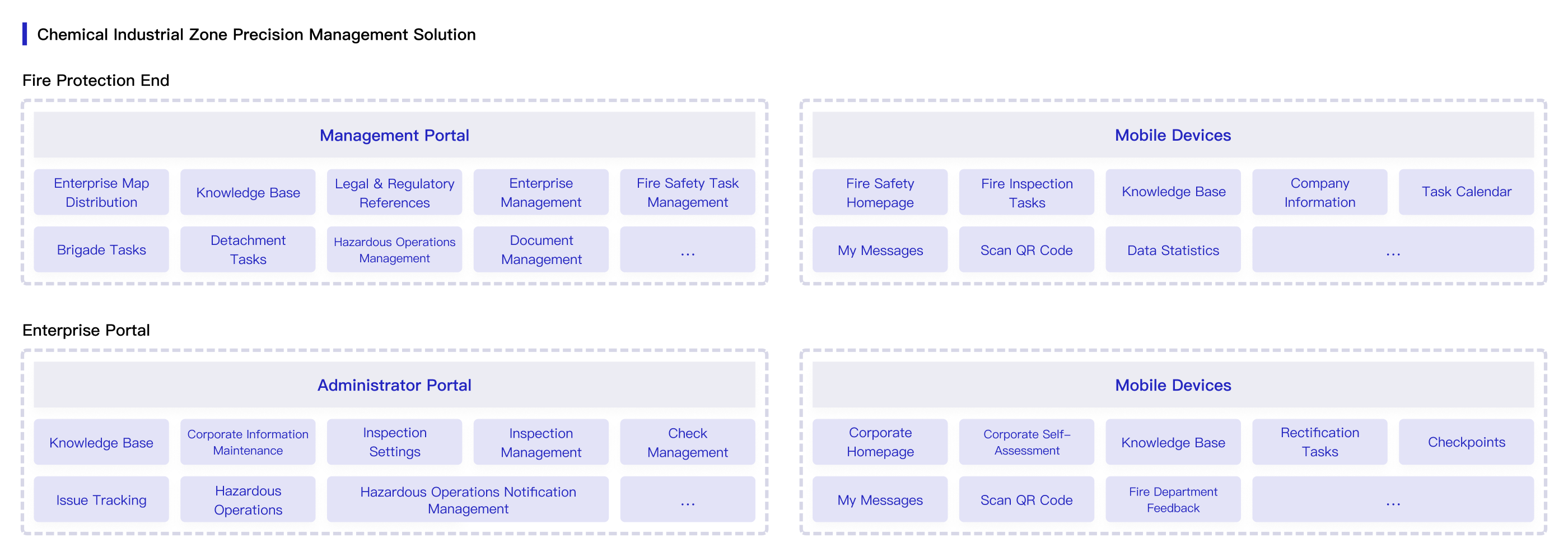
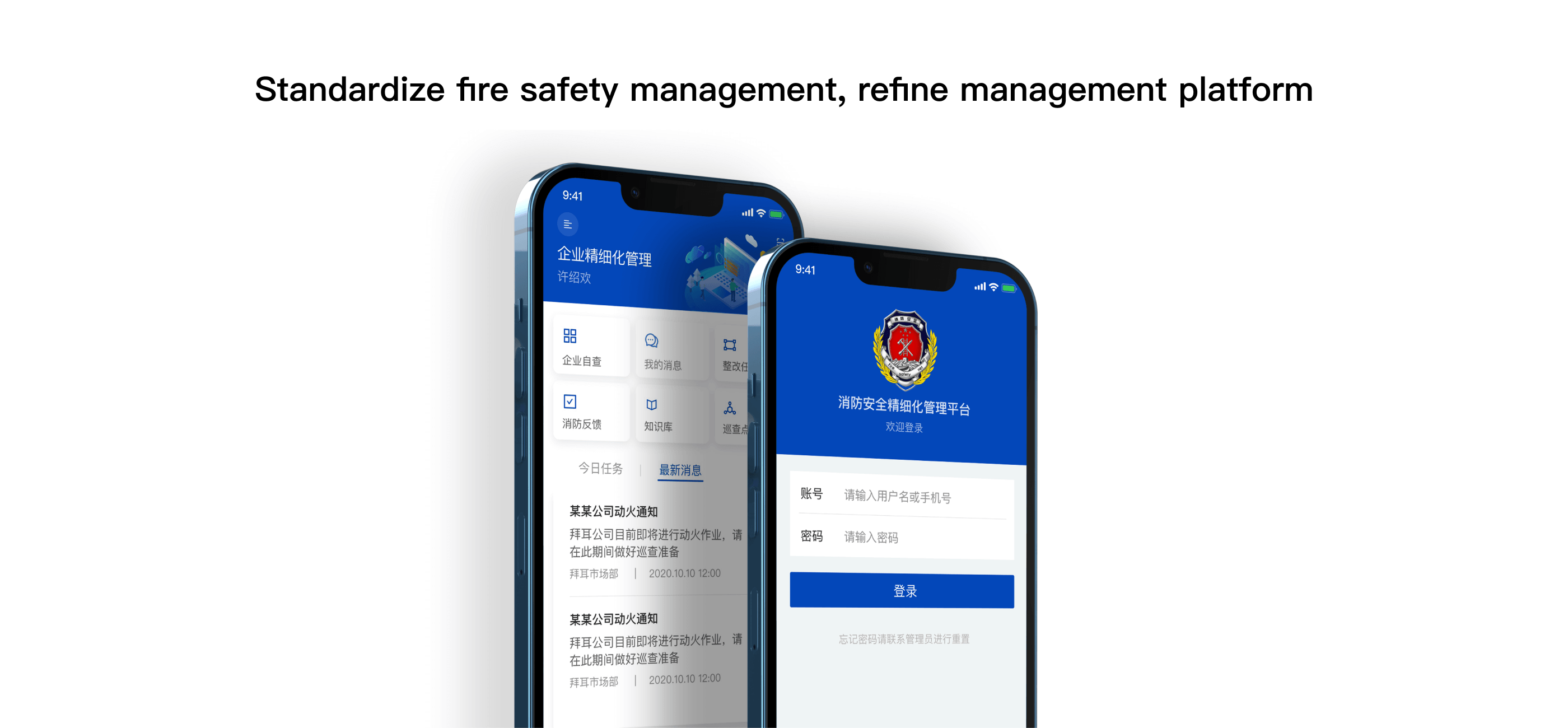
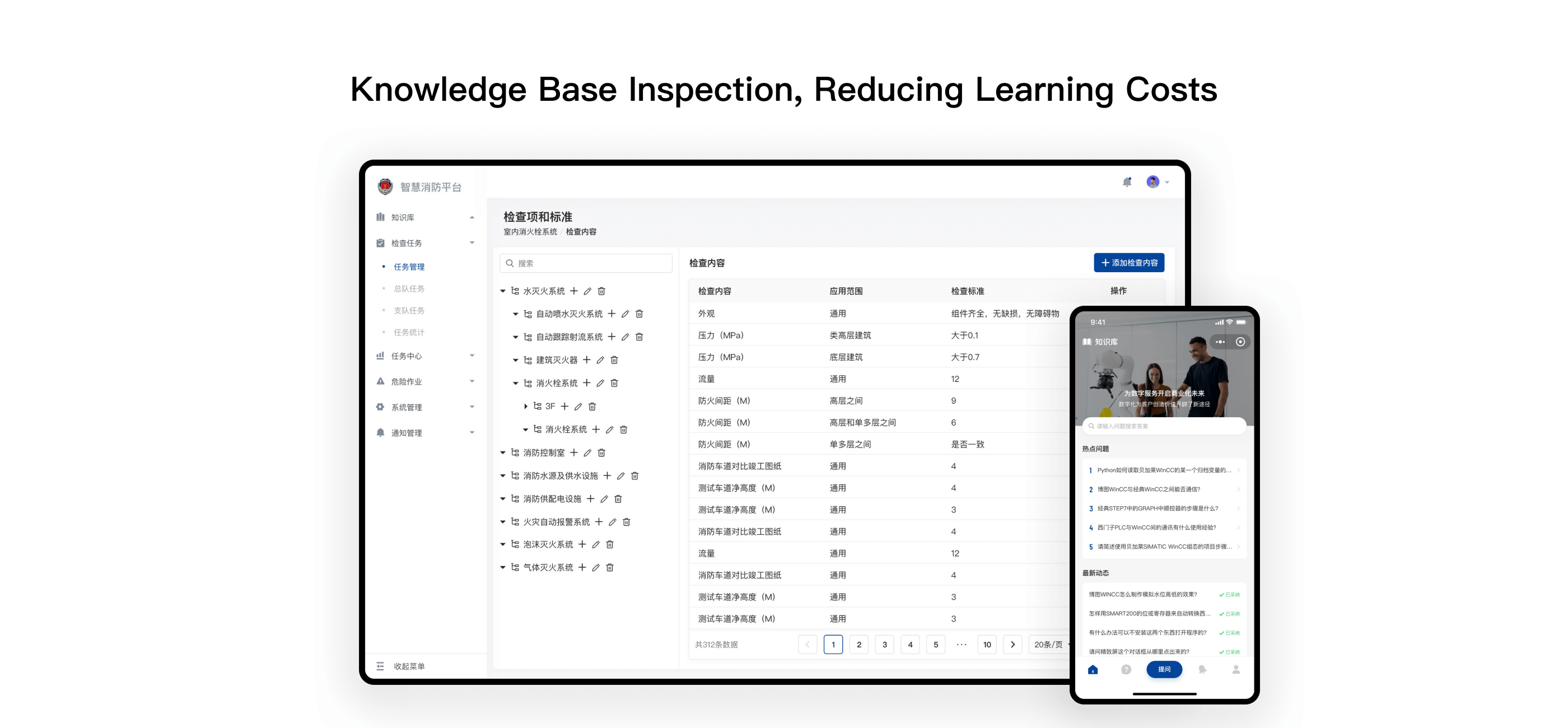
To assist the Shanghai Chemical Industry Fire Brigade in effectively managing enterprises within chemical industrial zones, and to help fire departments reduce fire hazards, prevent disasters, and standardize enterprise management, we have provided a refined fire safety management platform. This platform includes features such as a knowledge base, enterprise scoring, multi-type task generation and creation, inspection planning, and enterprise issue tracking.
1. Product Value
·Inspection Item Standards & Legal/Regulatory References
By maintaining the content, application scenarios, and inspection standards required during maintenance inspections, inspectors can perform inspections with minimal learning effort. Even personnel without prior operational experience can complete tasks simply by following the app's guidance.
·Enterprise Rating
The system automatically calculates enterprise ratings based on inspection results. It estimates the risk level of each enterprise according to their score. During task allocation, enterprises with higher risk ratings are more likely to be selected for fire safety spot checks.
·Support for Multiple Firefighting Task Types
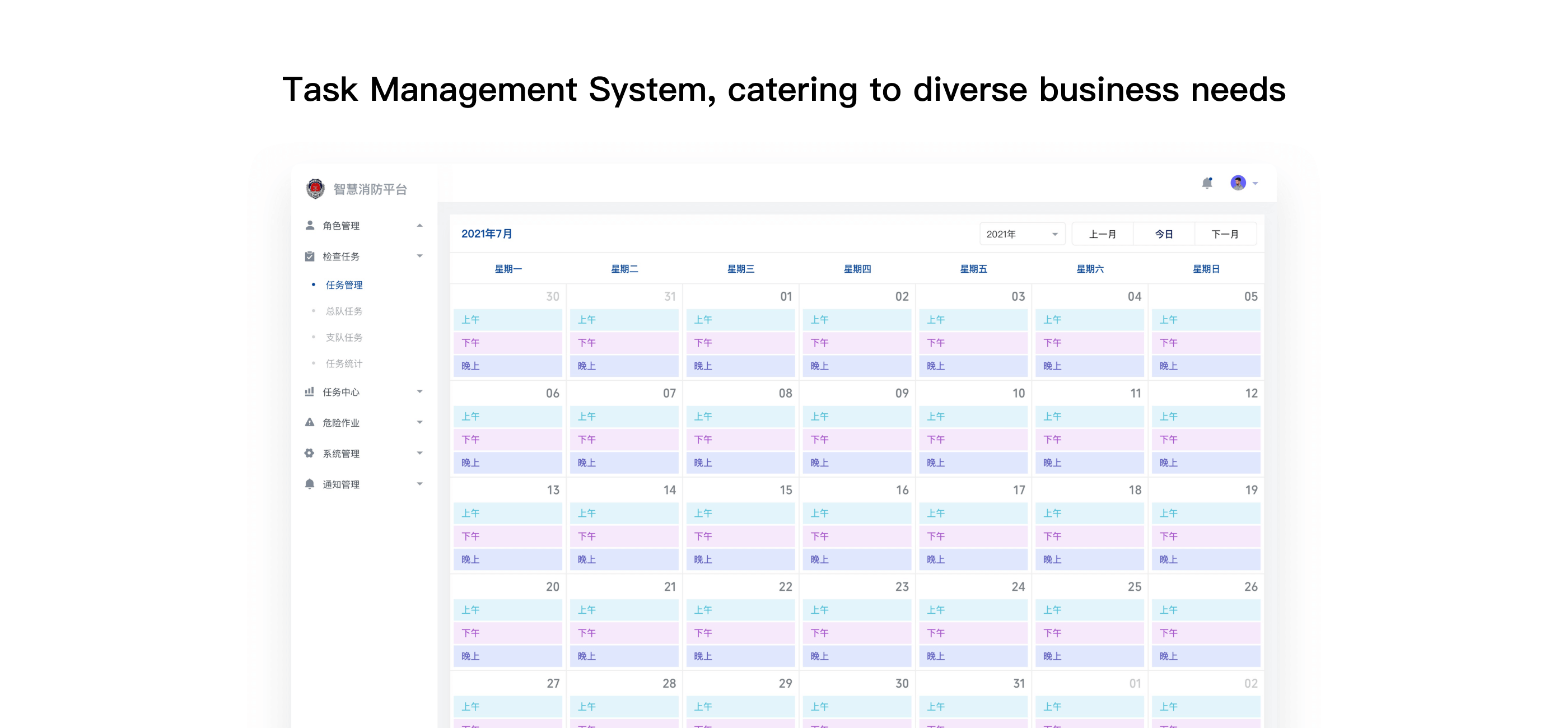
Provides various task types including brigade-level random inspections, sub-brigade-level random inspections, sub-brigade-level specialized tasks, and joint inspection tasks, supporting diverse operational requirements of fire departments.
·Daily Task Scheduling
Key information such as task execution month and inspection personnel is integrated with each inspector's availability to allocate tasks efficiently. Overtime hours for evenings and weekends can be configured to ensure completion of target tasks.
2. Product Matrix
III. City-Level IoT Access Platform
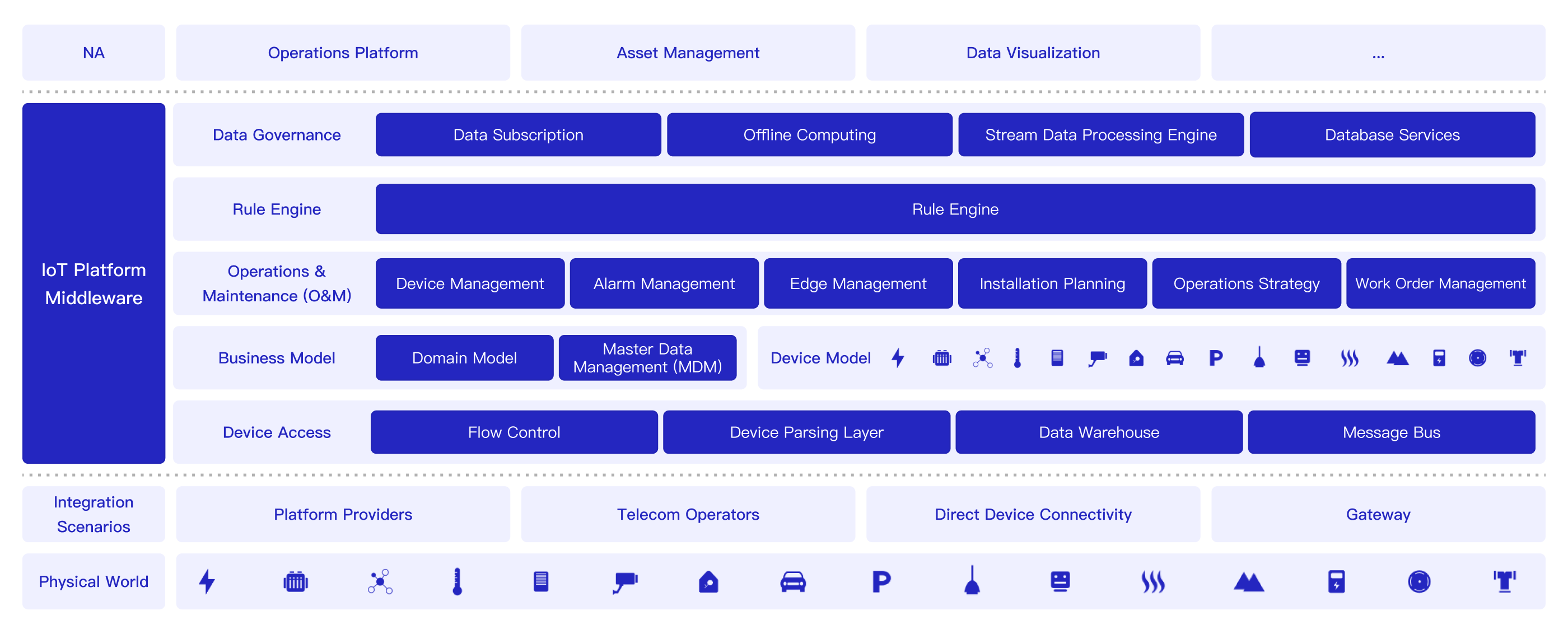
Through the UbOS IoT product foundation, it achieves hardware heterogeneity and unified data sources, supporting access from different manufacturers, protocols, models, and terminal types. It simultaneously cleanses the accessed data, defines data standards for various device types, and provides data support for the entire fire protection platform.
1. Product Value
·UbOS IoT Platform
To meet the citywide demand for fire equipment connectivity, the UbOS IoT platform functions as a critical intermediary layer between business systems and sensing devices. It delivers stable and reliable data subscription services to northbound applications, while downstream, Internet gateways enable large-scale integration of fire equipment and data. Together, this establishes a comprehensive, city-level sensing network.
·Massive Data and Computing Power Optimization
The first phase of the overall project involves connecting over 300,000 points. It must comply with domestic IT innovation standards and support private deployment, while the overall computing power costs must align with PPP project operational requirements. To meet these conditions, we leverage edge algorithms and a scalable architecture design to ensure a stable computing power foundation for massive data.
·Smart Fire Protection Equipment Protocol Library
Addressing complex scenarios involving 23 major categories of fire protection equipment, each with over five suppliers, we establish a unified data model by defining specifications for each category and designing object models compliant with the smart fire protection system. Concurrently, we build protocol translators for over 100 brands of terminal equipment to match these object models, ensuring data consistency for northbound applications.
2. Product Matrix